If you are reading this — I already know your story.
Because for three years, it was my story too.
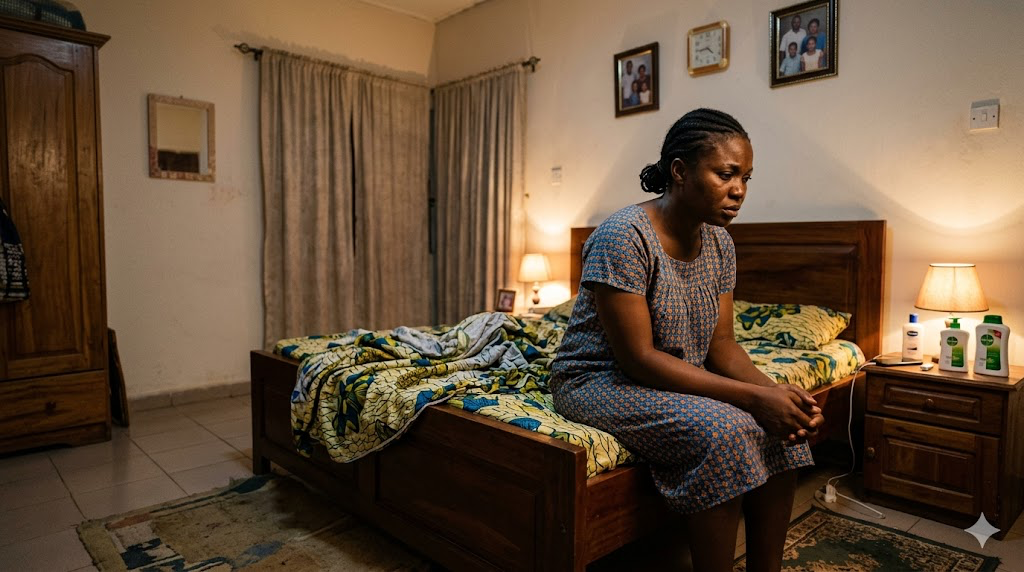
That moment you step out of the shower… and before you even finish drying off… you already know it is still there.
You have washed. You have scrubbed. You have used that expensive intimate wash you ordered from Jumia — the one that promised to keep you "fresh all day."
But by the time you sit down at your desk and cross your legs… you can already smell yourself.
"Can they smell me too?"
That is the question that plays on repeat in your head. All day. Every day.
In the meeting room. In the danfo. Sitting next to your colleague. Lying next to someone you like.
You have changed your underwear twice in one day — in the office bathroom, praying nobody walks in.
You have carried perfumed wipes in your bag like a secret weapon. You have avoided hugs. Avoided sitting too close. Avoided intimacy — not because you do not want it, but because you are terrified of what he might notice.
You have Googled things at 1am that you would never say out loud — and deleted the search history immediately, just in case.
"Why does my body keep doing this? Am I the only one? Is something wrong with me?"
And late at night, when everyone is asleep, the fears creep in:
"What if he leaves because of this? What if I end up alone? What if it never goes away?"
If you are exhausted from washing, hiding, and spending money on products that never work — then every word on this page was written for you.
Because what I am about to share with you changed everything for me. Not antibiotics. Not imported washes. Not another embarrassing gynaecologist visit. A simple natural protocol that has been quietly passed down among Yoruba women for generations.
Because I am about to share with you the simple 7-day ritual that finally eliminated my vaginal odour — at the root — without pharmacy products, without antibiotics, and without telling a single soul.
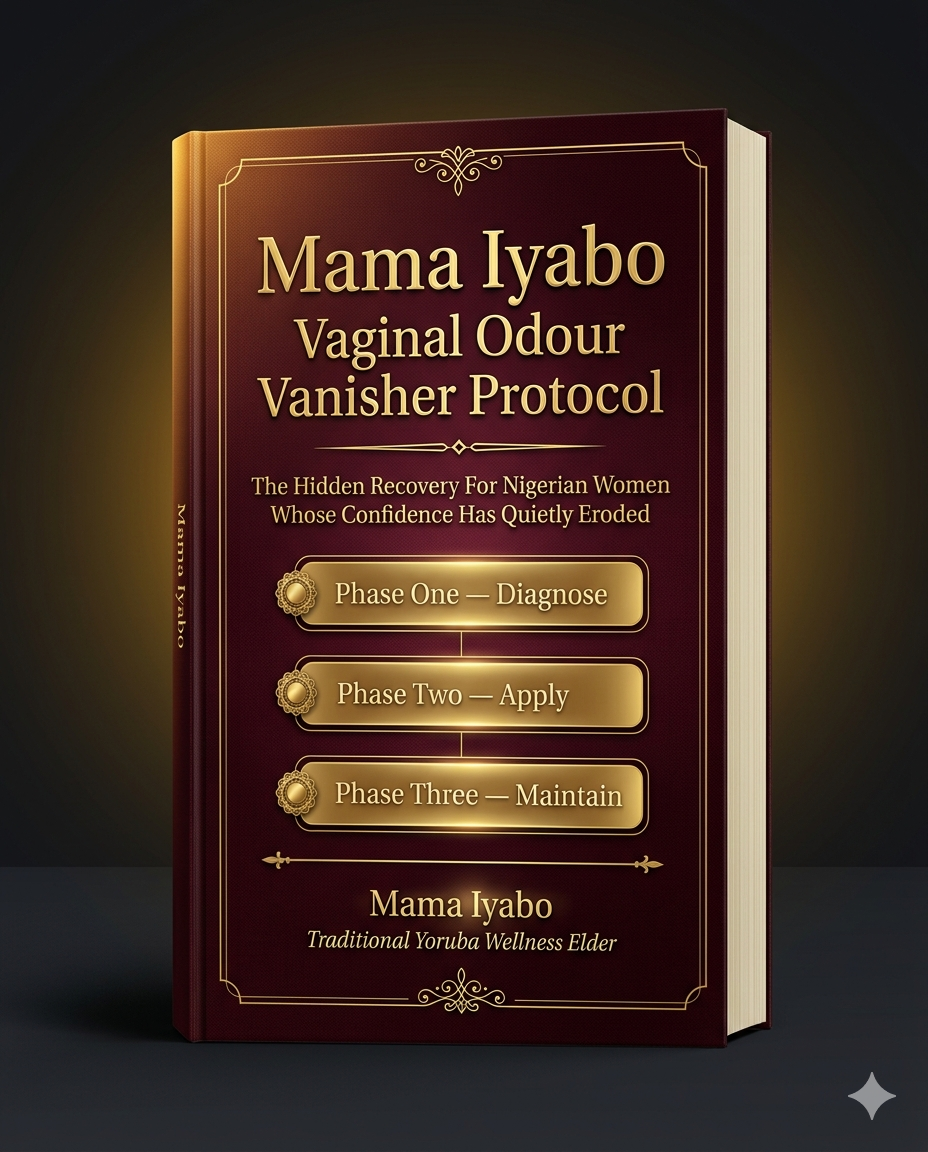
This method is not new. It has been quietly passed down from elder women to their daughters for generations. Our grandmothers knew it. Until Mama Iyabo brought it back into my life.
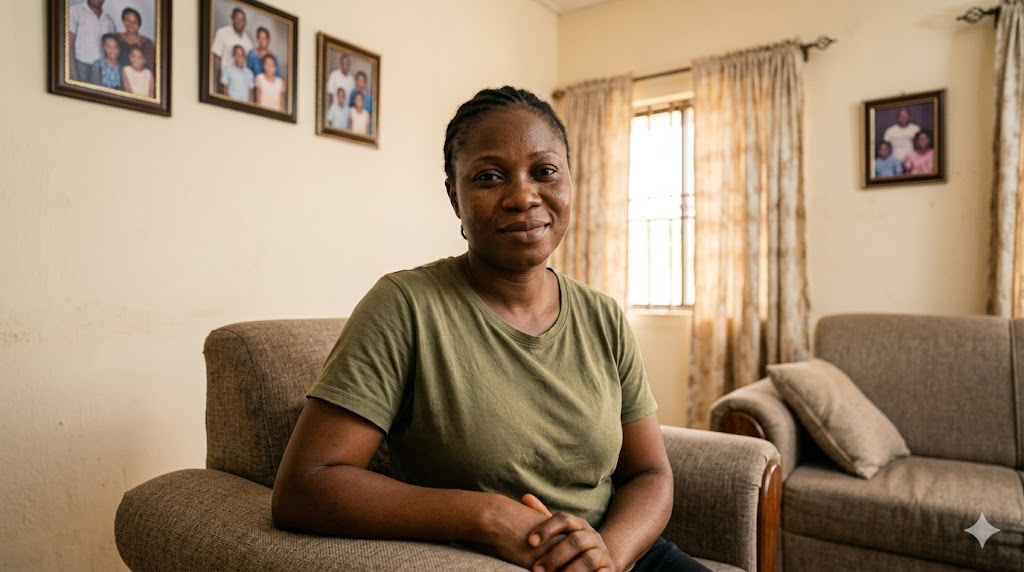
My name is Bimpe.
I am not a doctor. Not a nurse. Not a gynaecologist.
I am just a 29-year-old woman living in Lagos who silently struggled with this for three years… and eventually found a way out.
It started when I was 24.
One morning I noticed a smell I had never experienced before. At first I thought it was the Lagos heat. I bought a new intimate wash. I showered twice a day. I changed my underwear at lunch time. But it did not go away. It got worse.
It was the quiet kind. The kind only YOU know about. The kind that makes you hyperaware of every movement, every shift in your seat, every time someone leans in close.
I started avoiding people. At work, I chose the desk in the corner. In meetings, I sat near the window. On the bus, I stood instead of sitting so nobody would be at my level.
I stopped going on dates.
There was this guy — Chidi. Fine boy. Good job. Respectful. He asked me out for weeks. I said no every single time. Not because I did not like him. But because I was terrified of what would happen if he got close enough to notice.
"What if he smells me? What if he tells his friends? What if this is the reason I end up alone?"
That thought ate me alive.
After six months of suffering alone, I finally went to a gynaecologist. It took me three weeks just to book the appointment — because I was so embarrassed.
The doctor examined me. He barely explained anything. He just said it "might be an infection" and wrote me a prescription.
I sat on that okada going home, clutching the prescription, crying inside my helmet because part of me was sure I had an STI. I had not even been with anyone in months.
The antibiotics worked. For exactly two weeks.
Then the smell came back. Like it had never left. Like it was waiting.
Over the next two years, I tried everything. And I mean everything.
Femfresh and imported intimate washes — ₦3,500 a bottle. Masked the smell for a few hours, then it crept back. Every time.
Douching with apple cider vinegar — someone in a Facebook group swore by it. It burned. And within three days the odour was worse than before.
V-Wash, Lactacyd from Jumia — ₦4,000 here. ₦5,000 there. Month after month. Money going nowhere.
Perfumed pantyliners and intimate sprays — layering fragrance over something I was deeply ashamed of. I felt dirty even when I was clean.
Home remedies, salt water, steaming — desperate things from Facebook groups. Some did nothing. Some made it worse.
Prayer and fasting — I prayed about it. More than once. When it did not go away, I started wondering if something was spiritually wrong with me.
By the time I was 27, I had spent over ₦146,000. I had nothing to show for it. The smell was still there. My confidence was destroyed. And I had nobody — nobody — I could talk to.
I remember sitting on my bathroom floor one morning, back against the cold tiles, completely hollow. That was my lowest point.
In December last year, I travelled home to Osogbo for my aunt's 60th birthday.
During the party, I overheard two older women whispering near the kitchen. They were talking about a younger wife in the family who had been "having trouble down there" — and how someone called Mama Iyabo in Ile-Ife had helped her quietly.
My heart started racing.
"Who is Mama Iyabo? What did she do? How did she help?"
I was too ashamed to ask them directly. So I waited until after the party and pulled my aunt aside.
She looked at me. Not with judgment. Not with pity. Just with… understanding. The kind of look that says, "So you have that problem too."
She gave me directions. I drove to Ile-Ife the following Saturday morning.
Mama Iyabo is 71 years old. She lives in a small compound in Ile-Ife with a garden of medicinal herbs behind her house. For over four decades she has been the woman other women go to quietly — when they have problems they cannot take to the hospital.
She gave me water and chin-chin. Then she asked me, gently, what was troubling me.
For the first time in nearly three years… I told another human being what I had been going through.
I cried. I sat in that woman's parlour and cried like a child because I had carried this alone for so long, and finally someone was listening without flinching.
When I finished, she sat quietly. Then she leaned forward and said something I will never forget:
"My daughter, your body is not broken. The things you have been putting inside it are fighting what your body is trying to do on its own. Let me show you what we used to do before all these imported products confused everything."
So simple. Stupidly simple.
She walked me through the protocol — step by step. Not vague. The specific ingredients. The exact method. The timing. The daily rhythm.
Before I left, she smiled and said:
"Give it 7 days before you judge. Trust the process. The simple things are the ones that work. The expensive things are the ones that sell."
I started that same night.
Day 1, 2, 3: Nothing. By Day 3 I almost stopped. I thought, "Here we go again. Another thing that does not work."
Day 4: Something shifted. Subtle. But different.
Day 6: I woke up, went to the bathroom… and paused. The smell was gone. Not masked. Not covered. Gone. I checked again. And again. I could not believe it.
Day 10: I went through an entire workday — Lagos heat, third-floor office with no AC — and did not check myself once. Not once.
Day 14: Completely gone. And it has not come back since.
Three weeks later, I finally said yes to a date. Remember Chidi? I called him and said yes.
We talked for hours. And when things became intimate… I did not pull away. For the first time in three years, I was present. Not calculating. Not panicking. Just there.
Afterwards, he held me close and whispered:
"You smell so good. You always smell so good."
I excused myself to the bathroom and cried. Not from sadness. From relief. The prison I had lived in for three years was finally over.
I quietly shared Mama Iyabo's method with my cousin Shade and my friend Kemi. Both came back to me in tears within days. Then they told others. Soon women I barely knew were messaging me, asking what I used.
That is when I realised — this problem is everywhere. Women are carrying it silently. And the products on the market are failing them.
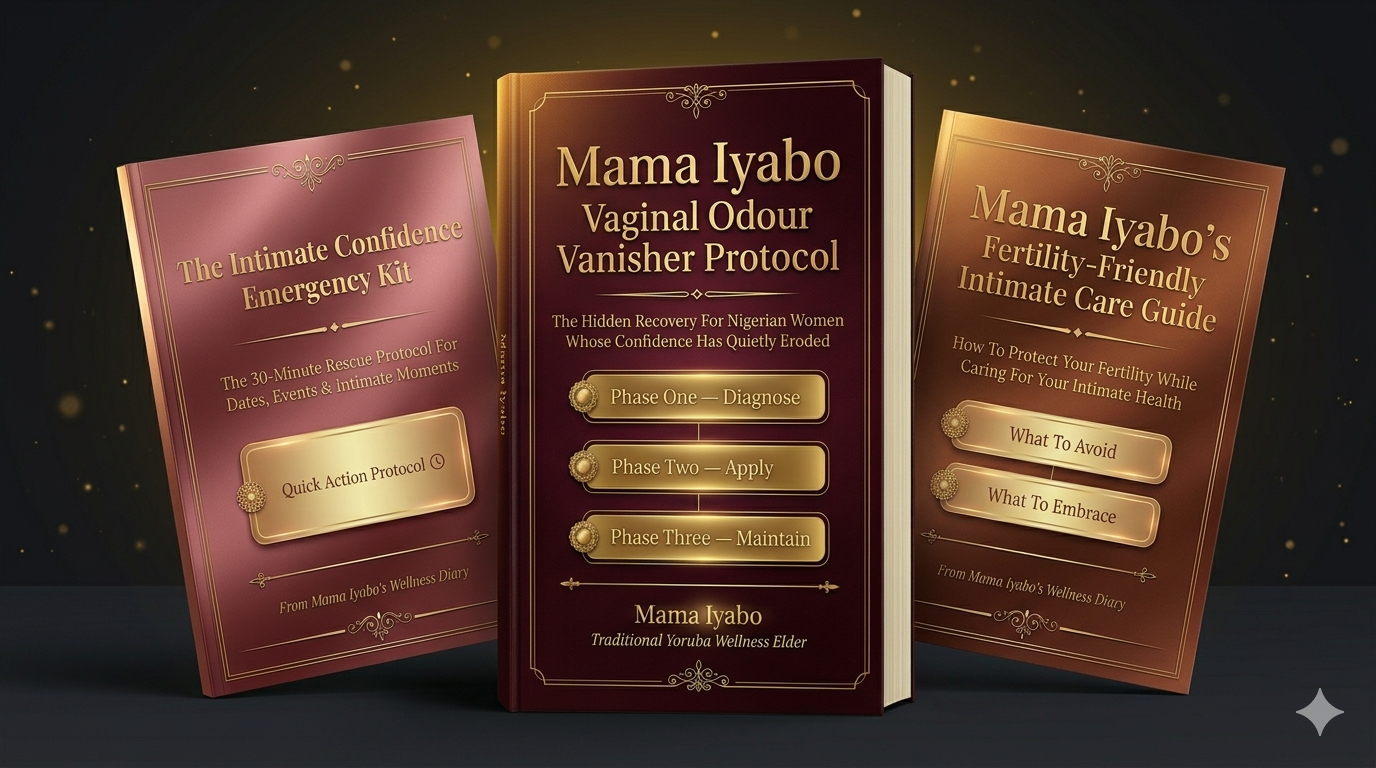
So I called Mama Iyabo and asked her permission to put everything she taught me into one complete guide. After much convincing, she agreed. On one condition:
"Make sure they follow it exactly. No shortcuts. And when they finally feel free… tell them to help the next woman quietly, the way you were helped."